6
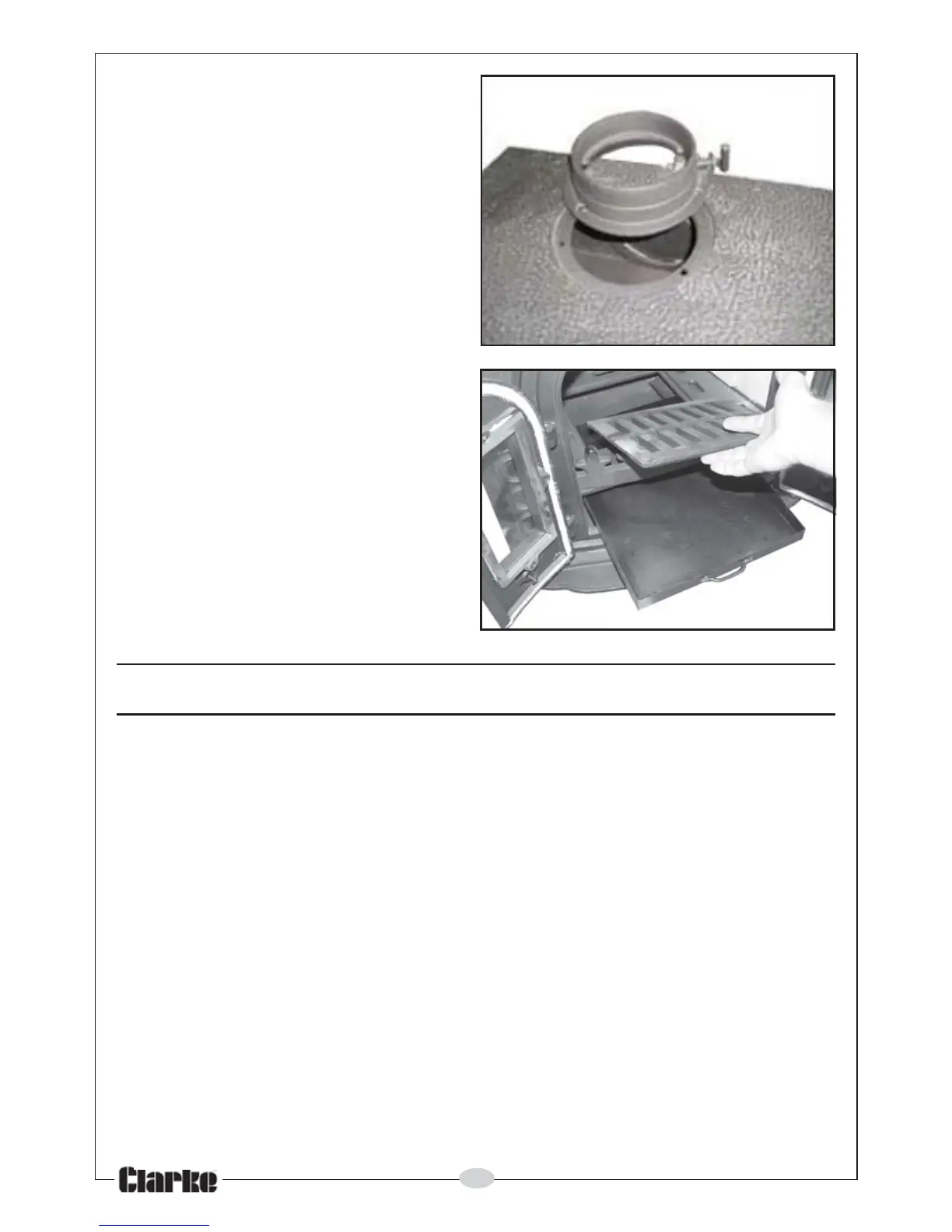
3. Attach the chimney flue
connector as shown in Fig 2
using the x-headed bolts & nuts
supplied. Ensure the fireproof
gasket is correctly seated in the
recess.
4. Install the blanking plate to the
rear panel of the stove when
the normal flue exit is required.
Ensure the fireproof gasket is
correctly seated in the recess.
• If the rear mounted flue
configuration is to be used, the
blanking plate will be fitted to
the top of the stove and the flue
connector to the rear panel.
5. Place stove in the desired
location as shown in
POSITIONING AND INSTALLATION.
6. Insert the grate and ash-box into
position inside the stove.
Fig 3
Fig 2
POSITIONING AND INSTALLATION
In England and Wales, there are only two routes to legally install a domestic
solid fuel or wood burning appliance. In other parts of the UK there are
variations in legislation and processes.
You can either:
• Use a registered installer who can self certify that the work he does
complies with the relevant Building Regulations; or
• The consumer applies to their local authority building control
department for a building notice, and pays the appropriate fee.
It is generally worthwhile to use a HETAS registered installer who will supply a
Certificate of Compliance as a record of the job and that it complies with
Building Regulations. A copy of the certificate is forwarded to HETAS who
notify the local authority on your behalf.
Failure to notify the work through the registration scheme (in this case HETAS)
or directly to the local authority can lead to enforcement. It can also cause
problems for future house sales if there is no official record of a compliant
installation. All local regulations, including those referring to National and
European Standards need to be complied with when installing this appliance.


 To Next Page
 Loading...