To Next PageTo Next Page
 Need help?
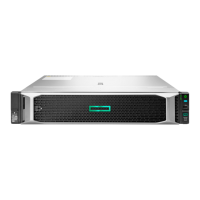
Do you have a question about the HPE PoLiant DL180 Gen10 Short Depth and is the answer not in the manual?
Instructions for locating and removing the system board battery using fingers.
Instructions for removing the mega cell holder from the chassis.
Steps to remove PSU, top cover, and capacitors using a flat head screwdriver.
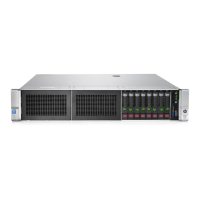
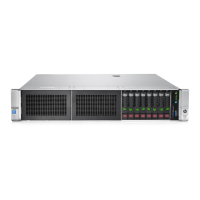
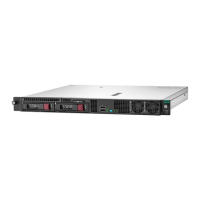
This document outlines the end-of-life disassembly instructions for Hewlett Packard Enterprise (HPE) servers, specifically focusing on the HPE ProLiant DL180 Gen10 Short Depth model. Its primary function is to guide end-of-life recyclers and treatment facilities in the proper disassembly of these products to remove components and materials that require selective treatment, as mandated by Directive 2012/19/EU of the European Parliament and of the Council on Waste Electrical and Electronic Equipment (WEEE). This ensures environmentally responsible disposal and recycling practices.
The document serves as a practical guide for dismantling the server, detailing the specific items that necessitate selective treatment. These items are categorized to ensure clarity and compliance with environmental regulations. For instance, Printed Circuit Boards (PCBs) or Printed Circuit Assemblies (PCAs) with a surface area greater than 10 square centimeters are identified as requiring selective treatment. The document specifies that a typical HPE ProLiant DL180 Gen10 Short Depth server contains four such PCBs. This precise quantification helps recyclers prepare for the volume of materials they will encounter.
Batteries are another critical category for selective treatment. The instructions emphasize that all types of batteries, including standard alkaline, lithium coin, or button-style batteries, must be removed and properly disposed of. The server model in question is indicated to contain two batteries. This highlights the importance of identifying and separating these components to prevent environmental contamination.
Mercury-containing components are also listed, with examples such as mercury in lamps, display backlights, scanner lamps, switches, and certain batteries. The document notes that the HPE ProLiant DL180 Gen10 Short Depth server does not contain any mercury-containing components, which simplifies the recycling process for this particular model in this regard.
Liquid Crystal Displays (LCDs) with a surface greater than 100 square centimeters, including those with background-illuminated gas discharge lamps, are another category for selective treatment. Similar to mercury-containing components, this server model is specified to contain no such LCDs. This information is crucial for recyclers to streamline their processes, as they do not need to allocate resources for handling these specific items for this server.
Cathode Ray Tubes (CRTs) are also listed as requiring selective treatment, but the HPE ProLiant DL180 Gen10 Short Depth server does not contain any. This is expected for modern server equipment, which typically uses LCD or LED displays rather than CRTs.
Capacitors or condensers containing PCBs/PCTs are identified as requiring selective treatment, though none are present in this server model. However, electrolytic capacitors or condensers measuring greater than 2.5 centimeters in diameter or height are present, with four such components noted in the server. This distinction is important for recyclers, as it directs their attention to specific types of capacitors that need special handling.
External electrical cables and cords, gas discharge lamps, and plastics containing brominated flame retardants weighing more than 25 grams (excluding PCBs or PCAs already listed) are also categories for selective treatment. The document states that the HPE ProLiant DL180 Gen10 Short Depth server does not contain any of these items, which further simplifies the disassembly process for recyclers.
Components and parts containing toner and ink, including liquids, semi-liquids (gel/paste), print heads, tubes, vent chambers, and service stations, are also listed. As a server, this product does not contain any of these printing-related components, as indicated in the document. Similarly, components and waste containing asbestos are listed, but none are present in this server model.
The document also details the tools required for disassembly. For the HPE ProLiant DL180 Gen10 Short Depth server, a Torx Driver of size T-10 and another Torx Driver of size T-15 are specified. This provides recyclers with the exact tools needed to efficiently dismantle the product without causing unnecessary damage or delays.
The disassembly process itself is broken down into basic, sequential steps. The first step involves locating the system board battery, which is typically a coin-cell battery. Users are instructed to use their fingers to remove it and dispose of it properly. This highlights a key maintenance feature: the ease of battery removal without specialized tools, promoting user-friendliness for both maintenance and end-of-life processing.
The second step involves removing "Mega cells." The instructions state to "Pull the mega cell holder to get them out of the chassis and dispose of properly." This suggests a modular design for these components, allowing for straightforward removal.
The third step focuses on capacitors larger than 2.5 cm. This involves removing the Power Supply Unit (PSU) from the system, then removing screws securing the top cover. Once the cover is off, the capacitors can be located and removed using a medium flat head screwdriver. This indicates a design that allows access to internal components for maintenance and selective treatment, although it requires a few more steps than battery removal.
The document includes optional graphic illustrations to aid in complex disassembly processes. For this server, three attachments are provided: "Attachment 1- Remove Electrolytic Capacitors," "Attachment 2- Locate and remove Coin Cell," and "Attachment 3- Locate and remove Megacell." These attachments visually guide the user through the removal of these specific components, enhancing clarity and reducing potential errors during disassembly. The images show the physical location of the capacitor, coin cell battery, and mega cell within the server, with arrows indicating the removal direction. For example, "Remove capacitor" is shown with an arrow pointing away from the component, and "Remove battery" is shown similarly. The "Remove Mega Cell" image also clearly indicates the component's location.
In summary, this document functions as a comprehensive guide for the end-of-life disassembly of the HPE ProLiant DL180 Gen10 Short Depth server, ensuring compliance with WEEE directives. It details components requiring selective treatment, specifies necessary tools, and outlines step-by-step removal procedures, complemented by visual aids. The design of the server, as implied by these instructions, incorporates features that facilitate component removal for both maintenance and recycling purposes, such as easily accessible batteries and modular components.
 General
| Product Type | Server |
|---|---|
| Form Factor | 2U Rack |
| Management | HPE iLO 5 |
| Processor | Intel Xeon Scalable Processors |
| Storage | Up to 12 x LFF or 24 x SFF drives |
| Network Controller | Embedded 1Gb Ethernet ports |
| Power Supply | 800W or 1600W |