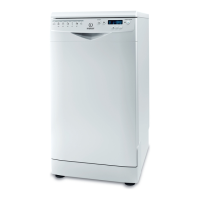
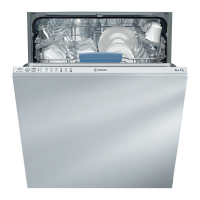
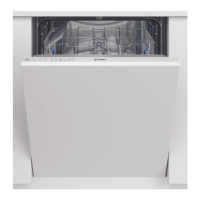
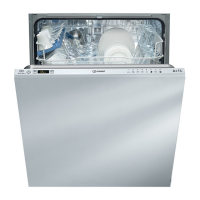
This document provides comprehensive operating instructions for the Indesit DISR 14B dishwasher, covering its functions, usage, and maintenance.
Function Description
The Indesit DISR 14B is a domestic dishwasher designed to clean crockery. It incorporates a water softener system to prevent limescale formation on dishes and internal components, which is crucial for optimal washing performance. The appliance offers various wash cycles tailored to different soil levels and types of crockery, including an Eco cycle for energy and water efficiency. It also features a drying function to facilitate the drying of dishes after washing. Safety mechanisms are built-in, such as anti-flooding protection, to ensure safe operation. The dishwasher is designed for ease of use, with a control panel that allows users to select wash cycles and monitor the appliance's status through indicator lights or a display.
Usage Features
Before the first use, it is essential to remove all packaging stoppers and elastic elements from the racks. The water softener settings must be adjusted according to the local water hardness, and the softener tank should be filled with water and then about 1 kg of refined salt. The appliance will indicate when the salt dispenser needs refilling. For optimal drying, rinse aid should also be added to its dispenser, and the dosage can be adjusted based on drying results.
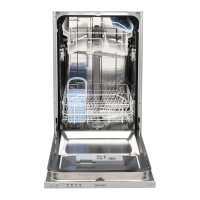
Loading the dishwasher correctly is key to achieving good washing results. Food residues should be removed from crockery, and liquids emptied from glasses and containers before loading. Preventive rinsing under running water is not necessary. Dishes should be arranged firmly to prevent tipping, with openings facing downwards to allow water to reach all surfaces. Lids, handles, trays, and frying pans should not obstruct the spray arms. Lightweight plastic items should be secured in the upper rack. The lower rack is suitable for larger items like pans, lids, and dishes, while the upper rack is designed for delicate items such as glasses, cups, and shallow salad bowls. Some models feature tip-up compartments and a cutlery basket for organized loading. The height of the upper rack can be adjusted to accommodate bulky items in the lower rack, but this should only be done when the rack is empty. Certain types of crockery, such as wooden items, delicate decorated glasses, and items not resistant to high temperatures, are unsuitable for dishwasher use.
For washing, the correct amount of detergent, either powder, liquid, or tablets, should be measured out according to the soil level and placed in the detergent dispenser. Using all-in-one detergents with the TABS option is recommended for best results. The wash cycle is started by turning on the water tap, opening the door, pressing the ON/OFF button, loading detergent, loading racks, selecting the desired wash cycle and options, and then shutting the door. The appliance will signal the end of the cycle with beeps and flashing indicator lights. It is advisable to wait a few minutes before unloading to avoid burns, starting with the lower rack. The dishwasher automatically switches off after long periods of inactivity to save energy. Wash cycles can be changed if a mistake was made at the beginning of the cycle, and extra crockery can be added during a cycle without switching off the machine.
Maintenance Features
Regular maintenance ensures the dishwasher's longevity and efficient performance. After each wash cycle, the water tap should be turned off, and the appliance unplugged before any cleaning or maintenance work. The external surfaces and control panel can be cleaned with a damp, non-abrasive cloth. Any internal marks can be removed with a cloth dampened with water and vinegar. To prevent unpleasant odors, the dishwasher door should be left ajar when not in use, and the door seals and detergent dispensers should be cleaned regularly to prevent food residue buildup.
The spray arms should be checked periodically for food residue and cleaned with a small non-metallic brush. Both upper and lower spray arms can be removed for cleaning. The filter assembly, consisting of three filters, is crucial for removing food residues from the washing water and must be cleaned regularly. The cylindrical filter, cup filter, and stainless-steel plate filter can be removed and cleaned under running water. It is important to re-place the filter assembly correctly after cleaning. If the water inlet hose is new or has been unused for a long time, it should be flushed to ensure it's clear of impurities. The water inlet filter at the tap outlet should also be cleaned regularly. For extended periods of disuse, the appliance should be disconnected from electricity and water, and the door left ajar. Before resuming use, an empty wash cycle should be run. Troubleshooting tips are provided for common issues such as the dishwasher not starting, not draining, making excessive noise, or leaving residues on dishes.


 To Next Page
 General