EasyManua.ls Logo

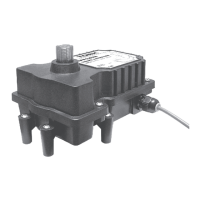
NSI Tork TPE24VA - User Manual

NSI Tork TPE24VA
4 pages
Print Icon
To Next Page IconTo Next Page
Loading...
POOL/SPA CONTROL
ACCESSORIES
INSTALLATION
OPERATION &
SERVICE MANUAL
MODEL TPE24VA VALVE ACTUATOR
Suitable for Pool / SPA Equipment Applications
MOUNTING ACTUATOR ON TOP OF VALVE
Screws (4)
Water flows into or
out of the valve
Figure 1. Standard Plumbing
Port A
Port B
(Common Port)
Port C
1. Unscrew the hold-down knob and remove handle from valve
shaft. Set aside the knob and handle for later use.
2. With a Phillips screwdriver, remove the four screws from the
valve body as shown in Figure 1.
3. Turn the actuator over and observe the teeth as shown in
Figure 2.
4. Place the actuator over the valve shaft so the small tooth
engages with the small slot in the valve shaft. See Figure 2.
5. Rotate the actuator until the actuator posts line up with the four
holes so it matches one of the mounting positions shown in
Figure 3. See table below for descriptions of mounting options.
Mounting Options
The actuator can also be mounted on top of a valve in four different
positions as shown in Figure 3. Depending on the plumbing of the
valve and mounting position of the actuator, the cams inside the
actuator may have to be reset. (See next section.)
6. Use the supplied four long stainless steel screws to attach the
actuator to the valve.
7. Use the hold-down knob set aside in step 1 to connect the
handle to the valve shaft.
8. Connect power supply cord to a CLASS 2 CIRCUIT ONLY,
rated 24V nominal, 4A or 100VA maximum.
Place actuator on valve so small tooth aligns
with small slot.
SMALL SLOT SMALL TOOTH
VALVE
BOTTOM
VIEW OF
ACTUATOR
Figure 2. Actuator Mounting
Port A
Port C
Port B (Common Port)
Figure 3. Mounting Positions
ITEM I
ITEM II
ITEM III ITEM IV
WARNING
Risk of Electrical Shock
TO BE CONNECTED TO A CLASS 2 CIRCUIT ONLY
ALL WIRING MUST COMPLY WITH ALL STATE AND LOCAL ELECTRICAL CODES INCLUDING THE
NATIONAL ELECTRICAL CODE AND/OR CANADIAN ELECTRICAL CODE.
READ, FOLLOW & SAVE THIS INSTRUCTION MANUAL
ELECTRICAL RATINGS : 24 Volts, 60 Hz, 0.75 Amps.
Normal Operation Duty Cycle: 1 minute ON (Max), 8 minutes OFF (Min). These
values may be temporarily exceeded during installation testing and adjustment.
Standard Plumbing - A three-port valve is the port B (middle)
being the incoming (common) port and A and C ports are the outlet
ports (see Figure 1).
Standard Actuator Mounting - The main body of the actuator
is over port B as shown in Item II of Figure 3.
Question and Answer IconNeed help?

Do you have a question about the NSI Tork TPE24VA and is the answer not in the manual?

Summary

Mounting Actuator on Top of Valve

Mounting Options

Details on valve port configurations like standard plumbing for actuator mounting.

Standard Actuator Mounting

Describes the main body position of the actuator over port B.

Resetting the Cams

Cam Adjustment Table

Table listing actuator positions, valve ports, and cam settings for proper operation.

Synchronization

Operation

Rotating Valve Actuator Electrically

Instructions for electrically rotating the valve actuator using the toggle switch.

Rotating Valve Actuator Manually

Steps for manually rotating the valve actuator using the hand-locking knob.

Maintenance

Servicing the Valve Actuator

Annual maintenance steps, including lubricating actuator seals and shafts.

Troubleshooting

Specifications

Summary

Mounting Actuator on Top of Valve

Mounting Options

Details on valve port configurations like standard plumbing for actuator mounting.

Standard Actuator Mounting

Describes the main body position of the actuator over port B.

Resetting the Cams

Cam Adjustment Table

Table listing actuator positions, valve ports, and cam settings for proper operation.

Synchronization

Operation

Rotating Valve Actuator Electrically

Instructions for electrically rotating the valve actuator using the toggle switch.

Rotating Valve Actuator Manually

Steps for manually rotating the valve actuator using the hand-locking knob.

Maintenance

Servicing the Valve Actuator

Annual maintenance steps, including lubricating actuator seals and shafts.

Troubleshooting

Specifications

Overview

The TORK nsi Model TPE24VA Valve Actuator is designed for use with pool and spa equipment, providing automated control over water flow. This device is an essential component for managing the circulation and direction of water in various pool and spa plumbing configurations.

Function Description

The valve actuator's primary function is to rotate a valve diverter, directing water to different ports (e.g., between a pool and a spa, or for draining/filling operations). It operates electrically, allowing for automated control, but also supports manual override for situations where power is unavailable or specific manual adjustments are needed. The actuator is designed to be mounted on top of a valve, engaging with the valve shaft to facilitate rotation.

The actuator features internal cams and switches that define its rotational limits and positions. These cams can be adjusted to synchronize the actuator's movement with the specific plumbing setup and desired water flow paths. Synchronization is crucial, especially in systems with multiple actuators or complex plumbing, to ensure that the actuators operate in harmony with the controller and other system components. A toggle switch on the rear of the actuator allows for quick synchronization adjustments if the actuator is rotating in the wrong direction relative to the system's controller.

Important Technical Specifications

  • Electrical Ratings:
    • Voltage: 24 Volts AC
    • Frequency: 60 Hz
    • Amperage: 0.75 Amps
  • Normal Operation Duty Cycle:
    • 1 minute ON (Maximum)
    • 8 minutes OFF (Minimum)
    • These values can be temporarily exceeded during installation testing and adjustment.
  • Operating Temperatures:
    • 14°F to 167°F (-10°C to 75°C)
  • Safety:
    • Must be connected to a Class 2 circuit only.
    • All wiring must comply with state and local electrical codes, including the National Electrical Code (NEC) and/or Canadian Electrical Code.

Usage Features

  • Mounting: The actuator is mounted on top of the valve by aligning a small tooth on the actuator with a small slot in the valve shaft. It then secures to the valve body using four stainless steel screws. The hold-down knob and handle are reattached to the valve shaft.
  • Mounting Positions: The actuator can be installed in four different positions (Item I, II, III, IV) relative to the valve's ports (A, B, C). The "Standard Actuator Mounting" places the main body over port B. The specific mounting position may necessitate resetting the internal cams.
  • Cam Adjustment: The internal cams determine the actuator's stop positions. If the actuator's rotation is not aligned with the desired flow paths, the cams can be reset. This involves removing the actuator lid, pushing down and rotating the shaft to align the 0-degree mark, loosening a locking nut, aligning specified markings on the cams with arrows on the switch housings, and then tightening the locking nut. A "Cam Adjustment Table" is provided to guide users on the correct cam settings based on the actuator position and the common/exit ports.
  • Synchronization: If the actuator rotates in the wrong direction, a 3-position toggle switch on the rear of the actuator can be used to reverse its direction, bringing it into sync with the controller or other actuators. The center position of this switch is OFF.
  • Manual Operation: The valve can be rotated manually even if there is no power. This involves toggling the rear switch to the center (OFF) position, loosening the hand-locking knob, pressing down on the knob to disengage the gear train, turning the handle to the desired position, pulling up on the handle to re-engage the gears, and then tightening the locking knob.
  • Electrical Operation: For electrical rotation, the valve switch at the rear of the actuator is toggled until the desired rotation is reached, then toggled to the center (OFF) to stop, and finally back to its original position.

Maintenance Features

  • Annual Lubrication: The valve actuator seals require annual greasing. Silicon-based lubricant, suitable for the purpose, should be applied to the lip seal located under the actuator (where the shaft exits the lower housing) and to the two ring seals in the lid (where the shaft exits at the top).
  • Lubrication Procedure: This involves toggling the rear switch to OFF, loosening the hand-locking knob, pressing down to force the shaft into manual state, applying lubricant with a small brush around the exposed shaft portion, turning the handle twice to spread the lubricant, pulling the handle to ensure gears are engaged, and then reattaching the handle and toggling the switch back to AUTO.
  • Troubleshooting Guide: The manual includes a comprehensive troubleshooting section to address common issues such as:
    • Actuator handle oscillates: Often due to lack of valve seal lubrication or obstruction in the valve body.
    • Actuator motor works, but valve diverter does not turn: Could be a broken actuator shaft, broken valve diverter, actuator in manual position, or damaged gear train.
    • Actuator motor does not turn: Possible causes include no power, toggle switch in OFF position, motor failure, or a failed/broken switch.
    • Actuator rotates in one direction but not back again: May indicate a broken/damaged switch, bad connections, bad control relay switch, or broken wire.
    • Water inside actuator: Suggests damaged seals.
    • Each problem is accompanied by a suggested solution, ranging from lubrication and checking connections to replacing specific components like the actuator, valve diverter, or switches.

Warranty

The product comes with a one-year limited warranty covering manufacturing defects. The manufacturer will repair or replace the product at its option. The warranty does not cover damage from accident, abuse, or misuse and disclaims all other warranties, expressed or implied, including merchantability.

NSI Tork TPE24VA Specifications

General IconGeneral
BrandNSI
ModelTork TPE24VA
CategoryController
LanguageEnglish

Related product manuals