To Next PageTo Next Page
 Need help?
Do you have a question about the STIEBEL ELTRON ETS 300 and is the answer not in the manual?
This document provides comprehensive information for the operation, installation, and maintenance of Stiebel Eltron ETS 200-700 series storage heaters. The manual is available in multiple languages, including German, English, French, Dutch, Czech, and Polish.
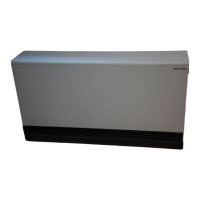
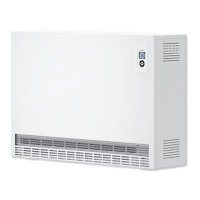
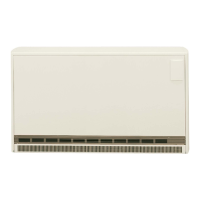
The ETS series appliances are electric storage heaters designed to heat living areas. They operate by storing electrically generated heat, primarily during off-peak hours when electricity is cheaper, as enabled by the power supply utility. The stored heat is then released into the room as hot air via a fan, and partially through the appliance's surface, to maintain a desired room temperature.
The heat storage (charge) level is set via a charge controller. The appliance can be used with or without a central weather-compensated charge control system. For appliances without a weather-compensated system, the "charge controller" rotary selector is adjusted based on seasonal needs (e.g., Stage 0 for no charge, Stage 1 for approx. 1/3 charge in between seasons, Stage 2 for approx. 2/3 charge on mild winter days, and Stage 3 for full charge on winter days). For appliances with a weather-compensated system, the "charge control" rotary selector is typically set to Stage 3, and the system ensures the correct charge level.
Heat transfer (discharge) is regulated by a room temperature controller, which can be wall-mounted or integrated into the appliance. This controller automatically manages the fan to maintain the adjusted room temperature. On extremely cold days or when away for several days, it is advisable to set a reduced room temperature (e.g., 10 °C) for frost protection rather than switching off the controller.
The storage blocks inside the heater are heated by elements positioned between them. The charge level can be infinitely adjusted, and the start and duration of the charge time are determined by the local power supply utility. Two integral protective temperature controllers and a high-limit safety cut-out prevent overheating. The protective temperature controllers reset automatically, while the high-limit safety cut-out requires manual resetting after the fault cause is addressed.
Room air is drawn in by the fan through the air inlet grille, heated by passing through ducts in the storage blocks, and then released as hot air. Before release, the hot air is mixed with cooler indoor air via two mixing air dampers to ensure the expelled air does not exceed the highest permissible temperature. The mixing ratio is regulated by a bi-metal controller.
The ETS series includes models ETS 200, ETS 300, ETS 400, ETS 500, ETS 600, and ETS 700.
Electrical Data:
Dimensions:
Weights:
Other Values:
The connected load can be reduced in three output stages by moving or removing jumpers at the terminals, in conjunction with a charge level reduction at the charge controller. The appliance is factory-wired for maximum output (100%).
User Interface: The appliance features a user interface with rotary selectors for charge control (heat storage) and discharge control (heat transfer/room temperature), along with ON/OFF switches for the discharge controller and an optional booster heater. The user interface cover can be flipped open for operation.
Safety:
Charge Controller Fault Characteristics: The factory setting is "positive fault characteristics (80% PS)," meaning the appliance fully charges if the charge control system is faulty. For digital charge control systems, this can be changed to "negative fault characteristics" (storage heater not charged) by replugging jumper X16 to "80% NS."
Control Signals: The electronic charge controller can be connected to different control unit control signals (AC or DC) and integrated into existing systems.
Cleaning:
Regular Checks:
Troubleshooting: The manual includes a status display for the charge controller (LED indicators for no fault, charging fault, or discharge fault) and a detailed fault table with common problems, causes, and remedies. For example, if the appliance does not heat up, potential causes include a faulty heating element contactor control, no power supply, or a tripped high-limit safety cut-out (F1). The high-limit safety cut-out can be manually reset.
Replacing a Fuse: The electronic charge controller is protected by a replaceable fine fuse (5x20 mm 2A slow) located in a two-part fuse holder between mains terminals X1 and X2. The appliance must be isolated from the power supply before changing the fuse.
Recommissioning: When reinstalling or modifying an appliance, thermal insulation parts should be replaced if damaged, insulation checked, and rated consumption measured. The appliance should then be started according to the commissioning chapter.
 General
| Brand | STIEBEL ELTRON |
|---|---|
| Model | ETS 300 |
| Category | Heater |
| Language | English |