
 Need help?
Do you have a question about the Toyota Land Cruiser 2015 and is the answer not in the manual?
Details the layout and components of the vehicle's instrument panel and steering wheel controls.
Explains the various indicators and symbols displayed on the instrument cluster for driver awareness.
Describes the operation of the keyless entry and smart key systems for locking and unlocking the vehicle.
Explains how to use the Smart Key system for starting the engine and accessing vehicle functions.
Details the operation of the automatic transmission, including P, R, N, D, and S modes.
Explains the operation of the four-wheel drive control switch for different driving conditions.
Details how to engage and disengage the center differential lock for enhanced traction.
Explains the operation of headlights, parking lights, fog lights, and turn signals.
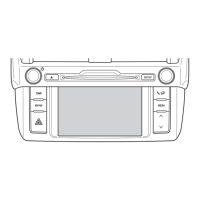
Guides on operating the audio system, including media selection, volume, and steering wheel controls.
Details the operation of the front and rear climate control systems, including automatic and manual modes.
Describes the Crawl Control system for low-speed off-road driving without pedal input.
Details the operation of dynamic radar cruise control for maintaining speed and distance.
Provides guidance on proper seat belt fit and use, including slack adjustment.
Explains how to initialize and interpret the Tire Pressure Monitoring System (TPMS).
Outlines the features of the Star Safety System, including VSC, TRAC, ABS, EBD, BA, and SST.
Explains how VSC helps prevent loss of traction and maintain vehicle control.
Details the layout and components of the vehicle's instrument panel and steering wheel controls.
Explains the various indicators and symbols displayed on the instrument cluster for driver awareness.
Describes the operation of the keyless entry and smart key systems for locking and unlocking the vehicle.
Explains how to use the Smart Key system for starting the engine and accessing vehicle functions.
Details the operation of the automatic transmission, including P, R, N, D, and S modes.
Explains the operation of the four-wheel drive control switch for different driving conditions.
Details how to engage and disengage the center differential lock for enhanced traction.
Explains the operation of headlights, parking lights, fog lights, and turn signals.
Guides on operating the audio system, including media selection, volume, and steering wheel controls.
Details the operation of the front and rear climate control systems, including automatic and manual modes.
Describes the Crawl Control system for low-speed off-road driving without pedal input.
Details the operation of dynamic radar cruise control for maintaining speed and distance.
Provides guidance on proper seat belt fit and use, including slack adjustment.
Explains how to initialize and interpret the Tire Pressure Monitoring System (TPMS).
Outlines the features of the Star Safety System, including VSC, TRAC, ABS, EBD, BA, and SST.
Explains how VSC helps prevent loss of traction and maintain vehicle control.
This document is a Quick Reference Guide for the 2015 Land Cruiser, providing a summary of basic vehicle operations, features, and safety information. It is not a substitute for the Owner's Manual but serves as a quick guide to locate and use the vehicle's main equipment.
The guide includes an index covering various aspects of the vehicle, from engine maintenance to safety features.
The instrument panel features a steering wheel with audio, telephone, and voice command controls, as well as buttons for the Multi-Information Display and Dynamic Radar Cruise Control. It also includes controls for headlights, turn signals, front fog lights, wipers, and washers. Indicators for "AIR BAG ON" and "AIR BAG OFF," a clock, and a front passenger seat belt reminder light are also present. The center console houses the "ENGINE START STOP" switch, four-wheel drive control, cruise control, tire pressure monitoring reset, headlight leveling dial, power outside rearview mirror controls, instrument panel light control, tilt and telescopic steering control, intuitive parking assist switch, center differential lock/unlock switch, roll sensing of curtain shield airbag OFF switch, heated steering wheel switch, VSC/TRAC OFF switch, and headlight cleaner.
The Multi-Information Display (MID) provides various information screens, including:
The Keyless Entry system allows for locking and unlocking operations using a remote. A panic button is also available. The Smart Key system enables starting the vehicle by depressing the brake pedal and pushing the "ENGINE START STOP" switch. It also allows for power operation (accessories, engine ON without starting) without depressing the brake pedal. Doors can be locked and unlocked by carrying the remote and using the door handles or the remote itself. The back door also has lock/unlock functionality.
The engine compartment includes the engine oil level dipstick, engine coolant reservoir, engine oil filler cap, windshield washer fluid tank, and power steering fluid reservoir. Regular maintenance, including oil changes, is recommended to extend vehicle life and maintain performance.
The fuel tank door is released by pulling a lever. The cap should be tightened until one click is heard; insufficient tightening may illuminate the "Check Engine" indicator.
The hood is released by pulling a lever inside the cabin and then lifting a latch under the hood.
A dial allows for brightness control of the instrument panel lights.
The transmission has Park (P), Reverse (R), Neutral (N), Drive (D), and "S" (Sequential) modes. To shift from Park, the "ENGINE START STOP" switch must be in "IGNITION ON" mode and the brake pedal depressed. "S" mode allows for manual upshift (+) and downshift (-) for increased power or engine braking.
The steering lock can be released by turning the steering wheel and pushing the "ENGINE START STOP" switch.
The four-wheel drive control switch allows selection between H4 (High speed) and L4 (Low speed). To shift to L4, the vehicle must be stopped, in "N" position, and the switch pushed and turned.
This switch locks the center differential for driving on slippery or bumpy surfaces, or when stuck in a ditch.
Front wipers can be intermittent (with adjustable frequency) or auto rain-sensing (with adjustable sensor sensitivity). Rear wipers also have intermittent and wash functions.
Side mirrors can be adjusted using a switch while in ACCESSORY or IGNITION ON mode. A linked mirror function automatically angles mirrors downwards when reversing, if the switch is in "L" or "R" position.
The back door can be raised and opened, and locked/unlocked using the entry function, wireless remote control, or door lock switch.
The moonroof offers sliding operation (push once for partway open, again for fully open) and tilting operation (up/down).
The audio system includes AM/FM/SAT radio, CD/DVD playback, and iPod®/USB/AUX port connectivity. Steering wheel switches allow for volume control and mode selection. Bluetooth® device pairing is available for hands-free calls and audio streaming.
The vehicle features a multi-zone climate control system (front and rear). Front controls include temperature selectors for driver and passenger, airflow controls, fan speed, A/C ON/OFF, "4-ZONE" button for independent temperature settings, windshield wiper de-icer, and various air intake and defogger modes. Rear air conditioning controls are also available.
Front seats offer heating and ventilation functions. Second-row seats also have heating.
Second-row seats can be tumbled forward for increased cargo space. This involves stowing seat belt buckles and head restraints, hooking seat belts to hangers, folding down the seatback, swinging the seat up and forward, and securing it with a holding strap. Seat hook covers are then installed.
Third-row seats also tumble for cargo space. The process involves stowing seat belt buckles and head restraints, hooking seat belts to hangers, folding down outer head restraints, folding the seats, lifting them sideward, locking them, and installing seat hook covers. Returning seats involves installing seat hook covers and lowering seats to their original position.
This system allows driving at a constant speed above 25 mph or following a vehicle at a fixed distance without using the accelerator or brake pedal. It offers adjustable vehicle-to-vehicle distance settings (LONG, MIDDLE, SHORT) and a fixed speed mode.
HomeLink® allows programming to operate garage doors, estate gates, and security lighting.
A cooler box can be turned ON/OFF with a "PWR" button, illuminating an indicator when active.
The parking brake is engaged by pulling the lever and released by pulling slightly and pushing the lever down.
Seat belts are designed to be kept as low on the hips as possible and can be fully extended and then retracted to hold child restraint systems securely.
The shoulder belt anchor height can be adjusted by pushing up or squeezing the lock release.
Child safety locks on the rear doors prevent them from being opened from the inside.
The spare tire and tools are located in the trunk area. Removing the spare tire involves removing a cover, inserting a jack handle extension into the lowering screw, and lowering the tire.
The system monitors tire pressure. After adjusting tire pressures or rotating/replacing tires, the system needs to be initialized by pressing and holding the "SET" button until the indicator blinks three times. The warning light may come on due to temperature changes or natural air leakage.
All Toyota vehicles come standard with the Star Safety System™, which includes:
Toyota floor mats are model-specific. For safety, only one floor mat should be used at a time, secured with retaining hooks, and installed right side up.
 General
| Brand | Toyota |
|---|---|
| Model | Land Cruiser 2015 |
| Category | Automobile |
| Language | English |





 To Next Page