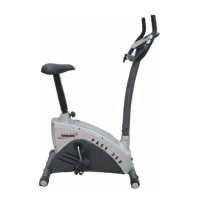
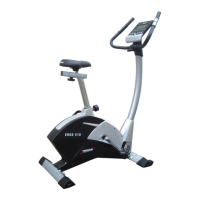
The Trojan Ergo 510 Stationary Cycle is a home-use fitness equipment designed for cardiovascular exercise and lower body muscle conditioning. It features a computer console for tracking workout data, adjustable resistance levels, and a comfortable design for extended use.
Function Description
The Ergo 510 Stationary Cycle provides a convenient and effective method for aerobic exercise and weight training, focusing on the lower body muscle groups and conditioning the circulatory system. Users can engage in various exercise programs, including manual mode, preset programs, user-defined programs, heart rate control (HRC), and watt-based training. The integrated computer console allows users to monitor key workout metrics such as time, distance, calories, pulse, watt, speed, and RPM, enabling them to track progress and optimize their training. The bike is designed for a single user at a time and emphasizes proper usage to prevent injury.
Important Technical Specifications
- Model: Trojan Ergo 510 Stationary Cycle
- User Weight Limit: Not to exceed 150 kg.
- Computer Power: Requires a 9V, 500mA adaptor.
- Display Ranges (Computer):
- Time: 0:00 to 99:99 (Setting range: 0:00 to 99:00)
- Distance: 0.00 to 99.99 km (Setting range: 0.00 to 99.90 km)
- Calories: 0 to 9999 (Setting range: 0 to 9990)
- Pulse: P-30 to 230 (Setting range: 0 to 230)
- Watt: 10 to 350 (Setting range: 10 to 350)
- Speed: 0.0 to 99.9 km/h
- RPM: 0 to 999
- Warranty: 1-year limited warranty for manufacturing defects in materials and workmanship under normal, personal, family, or household use. Demo models carry a 3-month warranty.
- Assembly Components: Includes front and rear stabilizers, pedals (left and right), seat post with saddle, handlebar post, handlebar, and computer console. Specific hardware includes various screws, washers, nuts, and cables for secure assembly.
- Frame Material: Main frame (D), Handlebar Post (C), Seat Post (H).
- Pedals: E-13 (R+L) screw into cranks. Left pedal screws anti-clockwise, right pedal clockwise.
- Adjustments: Height Adjusting Knob (D-2) for seat post, Adjusting Knob for resistance.
- Sensors: Hand Pulse Sensor (B-2) integrated into the handlebar.
Usage Features
- Pre-Assembly Check List: Users are advised to review the labeled parts and read the manual carefully before assembly and use.
- Assembly Steps: Detailed instructions are provided for assembling the stabilizer and pedal, seat tube, handlebar post, computer, and handlebar cover. Emphasizes ensuring cables are not damaged and all bolts and nuts are securely tightened.
- Computer Functions:
- MODE/ENTER: Confirms exercise data settings and enters programs.
- RESET: Reverts to the main menu.
- START/STOP: Initiates or halts exercise.
- RECOVERY: Tests heart rate recovery status.
- UP/DOWN: Selects training modes and adjusts function values.
- TOTAL RESET: Shuts down and powers on the computer.
- Operating Procedure: Connect power, set personal data (gender, age, height, weight), then select from various exercise programs (Manual, Program, User Program, HRC, Watt).
- Manual Mode: Allows setting targets for time, distance, calories, and pulse. Levels can be adjusted during exercise.
- Program Mode: Offers 12 preset programs with a time target. Levels can be adjusted during exercise.
- HRC (Heart Rate Control): Calculates target pulse based on user age, with adjustable target pulse range.
- User Program: Allows users to create their own exercise profile.
- WATT Mode: Sets a target watt value (10-350).
- Recovery Function: Measures heart rate recovery status (F1-F6) after exercise, indicating fitness level.
- Power Save Mode: Computer enters power save mode after 4 minutes of no pedaling, storing settings and data.
- Fitness Tips and Techniques:
- Aerobic Exercise: Encourages sustained activity to improve heart and lung fitness, using large muscle groups.
- Weight Training: Highlights its role in toning, building, and strengthening muscle.
- Muscle Chart: Illustrates the lower body muscle groups targeted by cycling (Quadriceps, Hamstrings, Gluteals, Gastrocnemius, Tibialis, Sartorius, Biceps, Abdominal, Serratus Anterior, Pectoralis Major, Tricep, Latissimus Dorsi, Trapezius).
- Conditioning Guidelines:
- Exercise Program Start: Begin slowly, especially for inactive or overweight individuals, gradually increasing time on equipment.
- Target Zone: Exercise within 65% to 85% of maximum heart rate for effective aerobic exercise.
- Pulse Monitoring: Instructions for measuring heart rate (six-second count multiplied by 10).
- Exercise Frequency: Plan three workouts per week with rest days, increasing to five if desired.
- Warm-Up and Cool-Down:
- Warm-Up: 5-10 minutes of stretching and light exercise to increase body temperature, heart rate, and circulation.
- Training Zone Exercise: 20-30 minutes within the target heart rate zone.
- Cool-Down: 5-10 minutes of stretching to increase muscle flexibility and prevent post-exercise problems.
- Suggested Stretches: Illustrated guide for Toe Touch, Hamstring, Calf/Achilles, Quadriceps, and Inner Thigh stretches.
- Safety Instructions:
- Health Warning: Consult a physician before starting any exercise program, especially if over 35, pregnant, or with existing illnesses. Stop exercising if faint, dizzy, or in pain.
- Access Control: Use in a supervised area, keep children away, and provide close supervision if children are present.
- Installation: Set up on a solid, level surface indoors, away from moisture and dust, with sufficient ventilation and at least 1m of space around the equipment.
- Proper Usage: Use only as designed, avoid exercising improperly or excessively, one person at a time, maintain balance, do not adjust parts while on equipment.
- Inspection: Regularly check for damaged or worn parts, ensure nuts and bolts are tightened, replace frayed cables/belts, inspect accessory clips, maintain labels, and perform preventative maintenance.
- Operating Warnings: Instruct all users on proper procedures, avoid loose clothing/jewelry, tie up long hair, and ensure others stay clear during operation.
- Electrical Safety: Keep power cord away from heat, do not use if cable/plug is frayed or damaged, avoid wet/damp areas, ensure grounding, and do not modify the plug.
Maintenance Features
- General Maintenance:
- Cleaning: Use a clean, damp, soft rag for surface cleaning. Mild detergent can be used for dirty spots. Avoid steel brushes or emery cloth.
- Sweat Removal: Immediately wipe off any sweat after exercise to prevent salt damage.
- Troubleshooting (FAQ):
- Incorrect Console Reading: Check connector, press reset.
- Functions Not Working/Incorrect Display: Check connector, press reset.
- No Pulse Reading/Unstable Data: Ensure proper hand contact with sensors (moisten hands if dry), check connecting wire, reset, and follow instructions. Avoid moving hands during pulse reading.
- Dim LCD: Check for direct sunlight, move if necessary.
- Repairs Procedure:
- Fault Reporting: Do not return the product to the store. Call Trojan Customer Services (0861 876526) to log the fault.
- Service Call Out: An operator will identify the fault and book a service team call out. The service team will arrange a date and time for collection.
- Repair Location: Items repaired in the service center will be returned to the user's home.
- Outlying Areas: For outlying areas, returning the product to the nearest store may be necessary.
- Cost of Repairs:
- Under Warranty: Repairs are free if compliant with warranty terms. Non-warranty items will be quoted for consumer approval.
- Out of Warranty: Consumer is responsible for repair costs, including call-out fees, with a quote provided for approval.
- Authorized Service: During the warranty period, only manufacturer-authorized agents can service or repair the product.

 Need help?
 General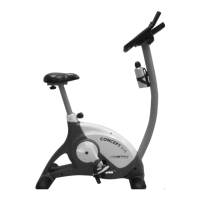

 To Next Page