To Next PageTo Next Page
 Need help?
Do you have a question about the York JVOHQ Series and is the answer not in the manual?
Defines hazard levels indicated by signal words like DANGER, WARNING, NOTICE, and NOTE.
Detailed warnings on installation, electrical safety, handling refrigerant, and preventing hazards.
Further warnings on usage, flammable materials, wiring, and potential hazards.
Important notices on electrical construction, user age, and system specifications.
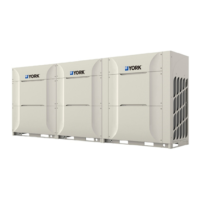
Overview of the outdoor unit's components and the refrigerating system cycle.
Lists essential tools and instruments needed for proper installation.
Details on identifying and selecting the correct outdoor unit model based on capacity.
Information on compatible combinations of indoor and outdoor units for system configuration.
Specifies compatible indoor units for various outdoor unit capacities and system configurations.
Guidelines for safe transport, handling, and storage of the unit.
Correct procedures and diagrams for lifting the outdoor unit with slings.
Lists and details the components included as factory accessories for the outdoor unit.
Guidelines for selecting the installation location and environment for the outdoor unit.
Specifies the required clearance and space around the outdoor unit for maintenance and airflow.
Details on constructing a proper concrete foundation for the outdoor unit, including height and drainage.
Procedures for managing condensate water discharge from the outdoor unit during heating/defrosting.
Specifies the type and quality of copper piping required for refrigerant lines.
Guidelines for preparing pipe ends and connecting refrigerant piping, including safety notes.
Details on flare dimensions, joint selection, and piping wall thickness specifications.
Guidelines for arranging outdoor units and piping connections between them.
Procedures for connecting refrigerant piping to outdoor units, including directional options.
Specific pipe diameters and lengths required for various outdoor unit model combinations.
Instructions for operating and handling the stop valves for refrigerant control.
Detailed instructions for connecting refrigerant pipes, including flare nut tightening and welding.
Rules and limitations for piping length, height difference, and connections.
Guidelines for pipe sizing when branch lengths exceed specified limits.
Safety warnings and guidelines for electrical wiring, including component protection and wire fixing.
Details on connecting power wires, communication wires, and recommended electrical parameters.
Step-by-step guide for connecting power, ground, and communication wires to the outdoor unit terminals.
Guidelines for connecting power and communication cables between indoor and outdoor units, including separation.
Procedure and function of outdoor unit DIP switches for configuration and operation.
Configuring communication, outdoor unit number, refrigerant system, and terminal resistance settings.
Details on how to select and configure specific operational functions using DIP switches.
Steps for performing an airtight test on the refrigerant piping system using nitrogen gas.
Instructions for vacuuming the refrigerant system to remove air and moisture, including pressure requirements.
Formulas and tables for calculating the required additional refrigerant based on piping and unit specifications.
Step-by-step guide for charging the system with the correct amount of refrigerant R410A.
Precautions regarding refrigerant leakage, critical concentration limits, and detection methods.
Checks and conditions that must be met before performing the test run.
Steps for conducting the trial run, including controller operations and checking the operating range.
Details the high-pressure switch function and set values for compressor protection.
Explains the purpose and operation of the crankcase heating band for lubricant oil.
Defines hazard levels indicated by signal words like DANGER, WARNING, NOTICE, and NOTE.
Detailed warnings on installation, electrical safety, handling refrigerant, and preventing hazards.
Further warnings on usage, flammable materials, wiring, and potential hazards.
Important notices on electrical construction, user age, and system specifications.
Overview of the outdoor unit's components and the refrigerating system cycle.
Lists essential tools and instruments needed for proper installation.
Details on identifying and selecting the correct outdoor unit model based on capacity.
Information on compatible combinations of indoor and outdoor units for system configuration.
Specifies compatible indoor units for various outdoor unit capacities and system configurations.
Guidelines for safe transport, handling, and storage of the unit.
Correct procedures and diagrams for lifting the outdoor unit with slings.
Lists and details the components included as factory accessories for the outdoor unit.
Guidelines for selecting the installation location and environment for the outdoor unit.
Specifies the required clearance and space around the outdoor unit for maintenance and airflow.
Details on constructing a proper concrete foundation for the outdoor unit, including height and drainage.
Procedures for managing condensate water discharge from the outdoor unit during heating/defrosting.
Specifies the type and quality of copper piping required for refrigerant lines.
Guidelines for preparing pipe ends and connecting refrigerant piping, including safety notes.
Details on flare dimensions, joint selection, and piping wall thickness specifications.
Guidelines for arranging outdoor units and piping connections between them.
Procedures for connecting refrigerant piping to outdoor units, including directional options.
Specific pipe diameters and lengths required for various outdoor unit model combinations.
Instructions for operating and handling the stop valves for refrigerant control.
Detailed instructions for connecting refrigerant pipes, including flare nut tightening and welding.
Rules and limitations for piping length, height difference, and connections.
Guidelines for pipe sizing when branch lengths exceed specified limits.
Safety warnings and guidelines for electrical wiring, including component protection and wire fixing.
Details on connecting power wires, communication wires, and recommended electrical parameters.
Step-by-step guide for connecting power, ground, and communication wires to the outdoor unit terminals.
Guidelines for connecting power and communication cables between indoor and outdoor units, including separation.
Procedure and function of outdoor unit DIP switches for configuration and operation.
Configuring communication, outdoor unit number, refrigerant system, and terminal resistance settings.
Details on how to select and configure specific operational functions using DIP switches.
Steps for performing an airtight test on the refrigerant piping system using nitrogen gas.
Instructions for vacuuming the refrigerant system to remove air and moisture, including pressure requirements.
Formulas and tables for calculating the required additional refrigerant based on piping and unit specifications.
Step-by-step guide for charging the system with the correct amount of refrigerant R410A.
Precautions regarding refrigerant leakage, critical concentration limits, and detection methods.
Checks and conditions that must be met before performing the test run.
Steps for conducting the trial run, including controller operations and checking the operating range.
Details the high-pressure switch function and set values for compressor protection.
Explains the purpose and operation of the crankcase heating band for lubricant oil.
 General
| Brand | York |
|---|---|
| Model | JVOHQ Series |
| Category | Air Conditioner |
| Language | English |