28
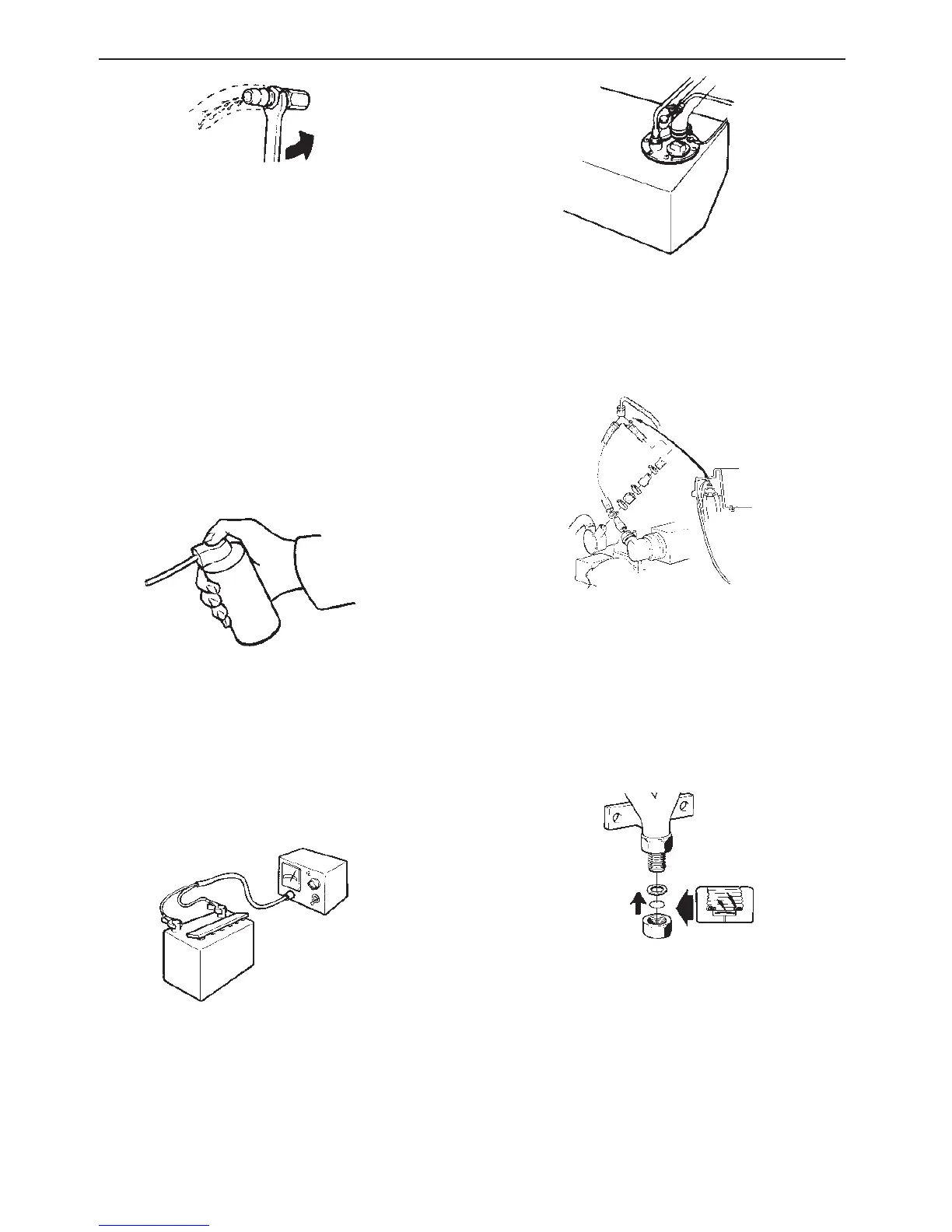
Remove the batteries from the boat. Clean them and
store them in a cool, dry place. Check that the batter-
ies are well charged. Trickle charge them according to
the manufacturer’s instructions (a flat battery can
easily be damaged as a result of freezing).
If the engine has a vacuum valve it must be taken
apart twice a season or whenever leaks occur.
Remove the entire valve from the bulkhead where it is
fitted.
Loosen the valve cover and remove the gasket and
diaphragm and clean out any deposits. Deformed
diaphragms must be replaced.
Installation should be done with the valve upside
down. Place the diaphragm in the cover. Ensure that
the entire diapragm is placed in the right location. The
diaphragm must not be trapped by the gasket. Insert
the gasket and screw on the cover.
CAUTION: Tighten torque 2 Nm (1.47 ft.Ibs). If the
cover is tightened too hard the valve will stop working.
There is no need to drain off this combined anti-
corrosion and anti-freezing mixture. If inhibiting is
done with emulsifying oils, there is no protection
against freezing, and the seawater system must
therefore be drained off. Check that the water runs
out, since dirt can block the cocks. Then close all
cocks. Remove the cover from the seawater pump.
Remove the impeller and rinse it in freschwater. Keep
the impeller in a sealed plastic bag during laying-up if
it is in good condition. (Otherwise fit a new impeller
when launching the boat)
Drain off any water or sediment from fuel tanks. Top
up all fuel tanks to prevent condensation during
storage period.
Clean the outside of engine, and reverse gear/S-
drive. Touch-up any bare patches in the paintwork
with Volvo Penta original paint. Spray the compo-
nents of the electrical system, and all the control
components with anti-moisture spray. All engine
control linkages should be inspected for wear, proper-
ly adjusted and protected from corrosion.


 To Next Page
 Loading...