D
Group 20
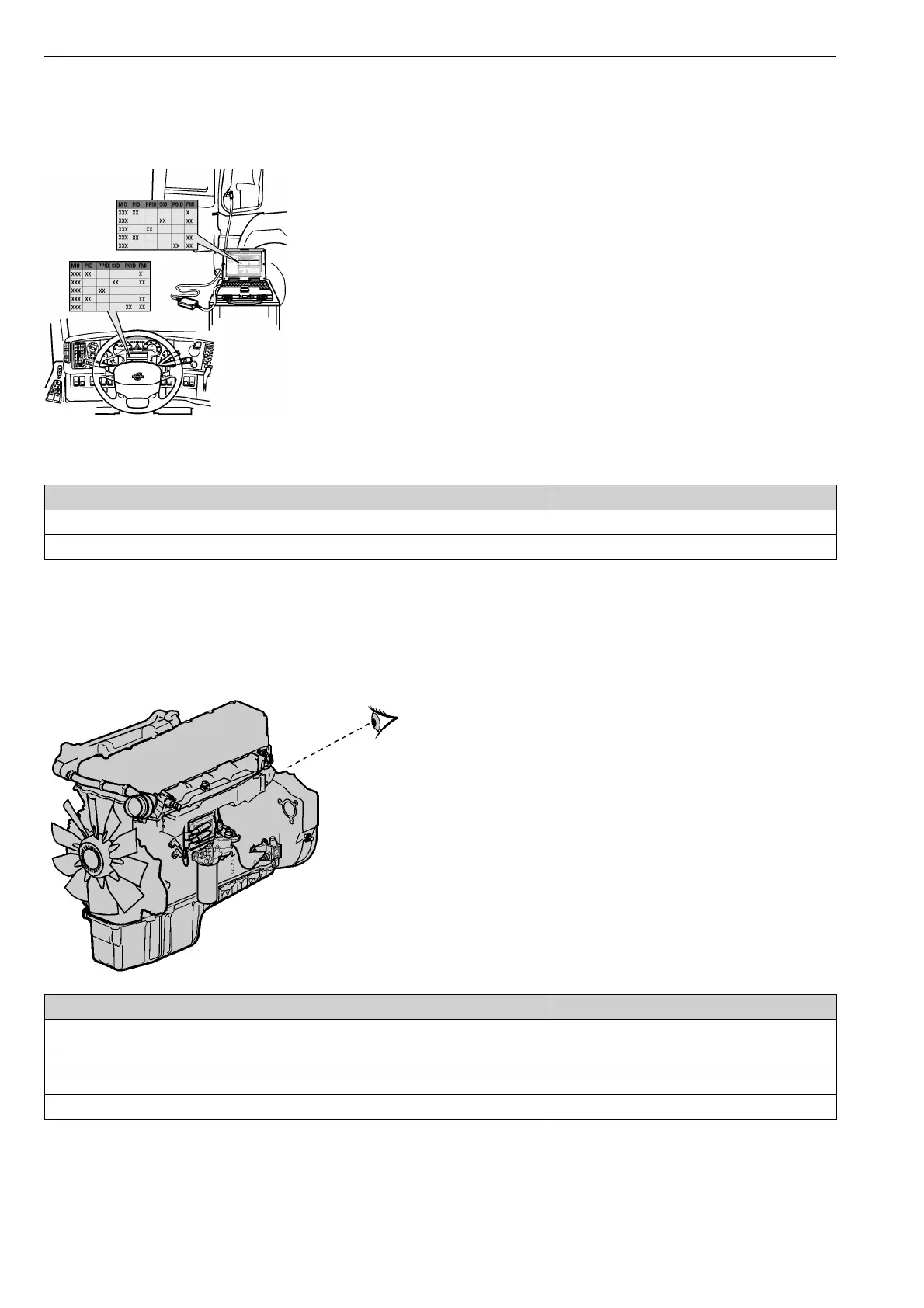
Step 1: Fault Code Readings
C2002639
Active and inactive registered fault codes can point to
faults but also be a fault finding aid for the symptom.
Freeze frames of information for specific fault codes may
also be helpful for finding causes for the symptom.
Fault tracing using relevant service information
should always be carried out for relevant fault codes.
Components/functions of special interest:
•
MID 128, Engine ECU
PID 94 Fuel supply pressure
PID 100 Engine oil pressure
PID 110 Engine coolant temperature
PID 175 Engine oil temperature
PPID 124 Exhaust pressure governor, EPG 1
Action: Refer to:
Check for active or inactive fault codes related to symptoms. Instrument cluster or VCADS Pro
Check inactive codes with high occurrences. VCADS Pro:“Fault Codes, Test Mode”
“Step 2: Visual Inspection (System Checks)” page 30 “Blue Smoke” page 26
Step 2: Visual Inspection (System Checks)
T2020217
Action: Refer to:
Check that the engine oil level is within specifications.
Check the crankcase ventilation system for damage or restrictions.
Check CAC hoses and pipes internally for oil.
Check condition of the air filter
“Step 3: VCADS Pro Tests” page 31 “Blue Smoke” page 26
30


 To Next Page
 Loading...