Do not use acidic detergents.
Do not mix different detergent products in order to prevent crystallisation which could de-
stroy the detergent dosing device ( 5.4).
Do not use products that can create foam, e.g. hand soap, soft soap, hand wash liquid. En-
sure that these do not enter the machine even during the pre-treatment of the dishes.
A detergent is necessary to ensure that the leftovers and dirt on the dishes is cleaned. Detergents can be
supplied as follows:
Manually as detergent powder.
Automatically from an external container using a detergent dosing device.
INFO The detergent dosing device is not included in the scope of delivery of all machines. When using
an external dosing device, a transfer strip is available for connecting the dosing device ( 16).
5.2.1 Manual dosing of detergent powder
Pre-dosing
Switch on the machine and wait until the display is lit green.
Adhere to the dosing instructions on the packaging of the detergent. The machine's tank capacity is ap-
prox. 35 litres.
Place approx. 100 g of detergent powder in the machine. This corresponds to a dosing of approx. 3 g/l.
Then start the wash cycle immediately to mix the detergent powder with the water.
Post-dosing
At each wash cycle approx. 2.5 litres of fresh water enter the dishwasher, which must be mixed with deter-
gent powder.
Fill approx. 40 g of detergent powder in the machine after 5 wash cycles.
5.2.2 Automatic dosing of liquid detergent
The authorised service technician sets the dosing amount when commissioning the machine ( 12).
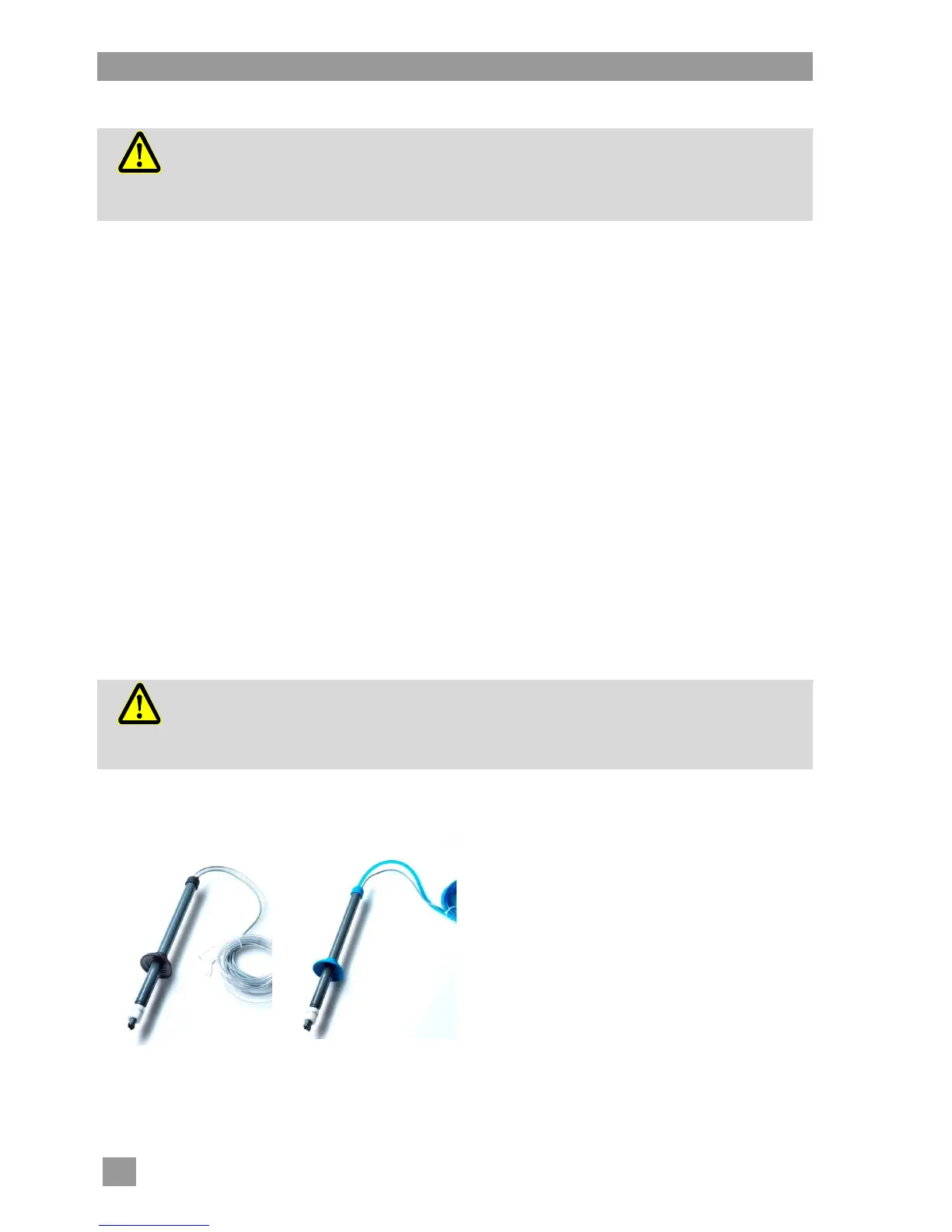
5.3 Suction tube with level control
Only use the suction tube with sufficiently stable containers. Narrow and tall containers can
tip if the suction tube is pulled.
Do not place the suction tube for the rinse aid in the detergent container or vice versa.
Do not pull unnecessarily on the suction hose or main power cable, as this may lead to a
defect.


 To Next Page
 Loading...