2. RADAR, CHART RADAR OPERATION
2-69
2.42.5 Solid state radar
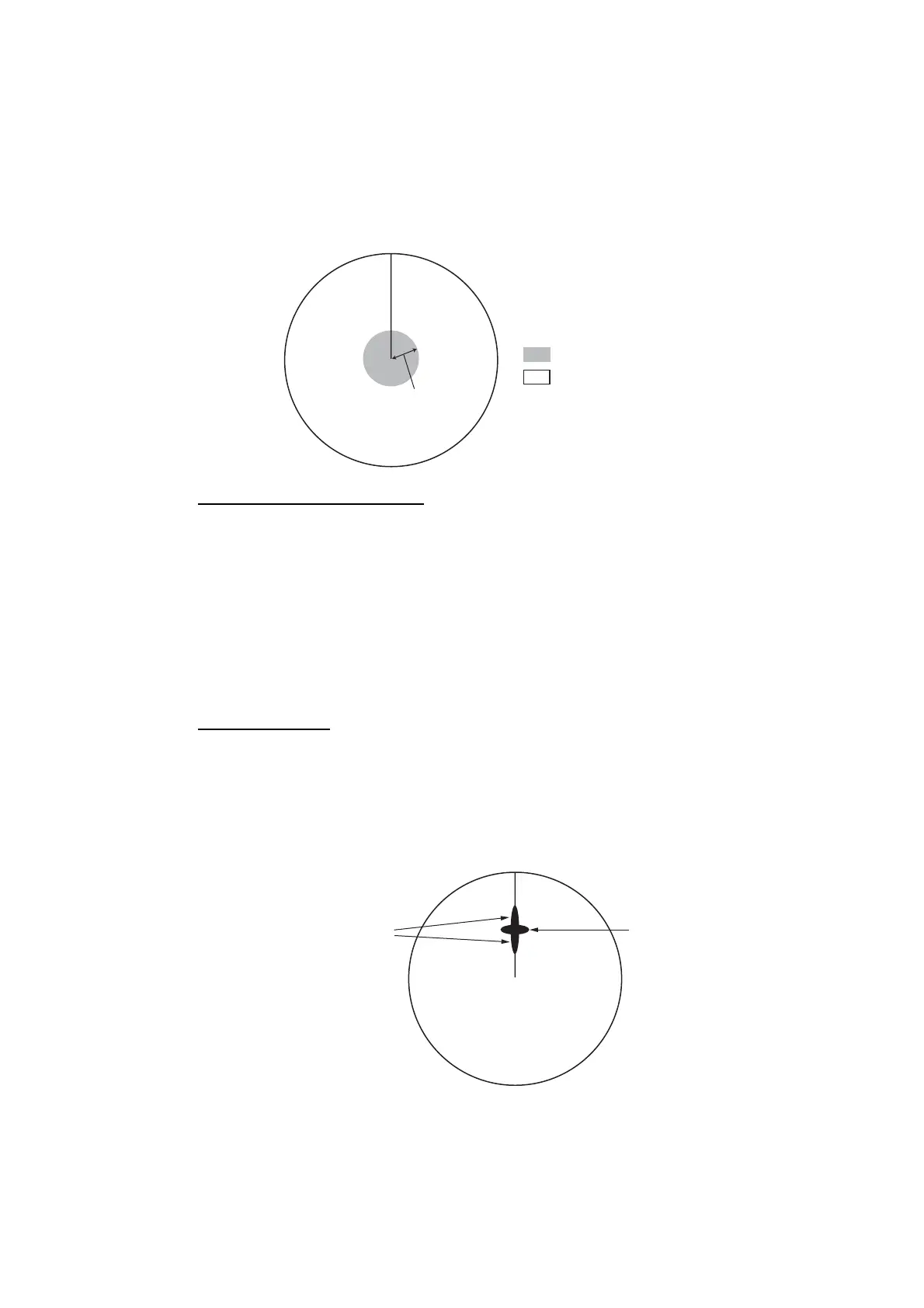
A solid state radar transmits and receives using pulse compression beyond synthesis
distance (approx. 0.5 NM to 2 NM (depending on the pulse length)), and using non-
compression within synthesis distance. The radar echoes of a solid state radar are
synthesized echoes using these two methods. The objects may be displayed differ-
ently when compared to the echoes from a magnetron radar.
Range and signal intensity
When the range is beyond synthesis distance using pulse compression, the signal in-
tensity is equivalent to a magnetron radar, although the transmission power is lower.
When the range is within synthesis distance using non-compression, the signal inten-
sity (including sea clutter and rain clutter) is lower than a magnetron radar because of
the transmission power difference.
When an object enters to the synthesis distance, it is displayed with lower signal in-
tensity.
Range sidelobe
As a result of pulse compression, range sidelobes may appear to the front and rear of
a strong reflected echo. When the direction of the echo changes, the reflection weak-
ens and the range sidelobes may disappear. Range sidelobes can also be removed
by reducing the gain.
Synthesis
distance*
: Non-compression
: Pulse compression
*: Approx. 0.5 NM to 2 NM
(depending on the pulse length)
Echo
Range sidelobes


 To Next Page
 Loading...