I
40
CHANGE ENGINE OIL AT THESE INTERVALS
Change
the
engine
oil after the first
two
operating
hours
(about one
tankful
of
fuel).
Then,
change
oil every ten hours,
or
sooner if
tilling
in dusty,
dry
soil.
This
is more often than
the
engine
manufacturer
recommends-but
it
will pay
good
dividends, an engine that will
last and last. It's normal
for
engine
oil
to
get
black,
but
check
the oil
for
grime,
dirt
and
grit-then,
change
it when needed, no matter
how
few operating hours you have used that
oil.
IMPORTANT: When
tilling
in extremely
dusty
conditions, check the oil
for
level and presence
of
dirt, and
check
the air
filter
for
dirt
very
frequently. Every half
hour
is none
too
often.
Change the oil and clean the air cleaner when
they're dirty. If you take both
of
these actions,
your
engine will last much,
much
longer.
For operation
of
all engines used on
Troy-Silt
Tillers, please remember
to
check the
dipstick
to
see that engine oil
is
kept
up
close
to
the
"Full"
mark all
of
the time. Always make sure
that
you use the
proper
grade
of
oil in
your
en-
gine.
SE
must be printed on the
top
of
the oil
can,
or
on the label. Please make sure that the
air
cleaner
is clean and
tightly
fitted before you
operate
your
engine. .
HOW TO PRESERVE ENGINE LIFE
When operating
your
tiller, please
don't
run
your
engine at full
throttle
all
of
the time. In-
stead,
try
to
judge
when the engine is
provid-
ing the proper
amount
of
power-not
too
little,
but
not
too
much.
Matching
engine
power
to
the work is easier on the
engine
and on the
til-
ler. The sound
of
your
engine operating will be
your
best guide.
When
you
are
through
with the
tiller
and are
ready to
put
it away
for
the day, let it run
\'It
low
or
idle speed
for
two
or
three minutes
without
any load on the engine. In fact, let it
run at
low
speed
during
brief interludes when
you're
not
actually
working
the
tiller-while
you're
picking
up
rocks, preparing to start a
new row,
or
just
hesitating
for
a moment. Thi$
practice
of
giving
your
engine
a
"rest"
period,
will improve fuel
economy
and
will
add years
to
the life
of
your
engine. It
will
also
cool
down
a
hot
engine, if its
cooling
fins
are
not
clogged
with dirt.
HELPFUL INFORMATION
ABOUT MOTOR OIL
We
suggest that you use #30 oil that is rated
SE
for
the greatest
engine
protection
against
hi9,h
temperatures,
oxidation,
rust,
corrosion
and
dirt
buildup.
SE
oil provides
more
reliable
protection
of
bearings and bearing surfaces at
high temperatures. As we have
just
explained,
small engines generate a
lot
of
heat and the
oils
we
recommend will stand
up
best
to
that
heat.
SE
classified oil meets the
specifications
of
all engines used
for
Troy-Silt
Tillers.
The
"s"
in
"SE"
means Service Oil, referring
to
Automobile
Service Stations. The
"E"
in
"SE" is the level
of
the oil's rating. The
higher
the letter in the alphabet,
the
higher
the
tem-
perature rating
for
the oil.
ADDING GASOLINE
Use the
proper
gasoline
for
your
engine.
Don't
overfill the tank.
Don't
fill any closer than one
half inch from
filling
neck
of
tank.
Don't
smoke
while refueling. Clean gasoline spills
off
engine
and
tiller
before starting engine.
CONTROLS AND OPERATION
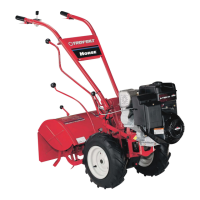
Your
Troy-Silt
Horse Model Roto
Tiller-Pow-
er
Composter
comes
equipped
with a 6 HP
Tecumseh-Lauson engine,
or
a 7 HP Kohler
engine.
Location and
identification
of
the
controls
for
each .engine are shown
below
in succeeding
photographs. In
addition
to
the
following
infor-
mation, please
consult
the
engine
manufactur-
er's
owner
guide
which
was in
the
plastic en-
velope that came
with
your
Troy-Silt
Tiller.


 To Next Page
 Loading...